

Sustainable Livestock Husbandry and Animal Health Management
Head of the chair: Prof. Dr. med. vet. Markus Freick
About us
The Chair of Sustainable Livestock Husbandry and Animal Health Management at Martin Luther University Halle-Wittenberg is dedicated to the development of husbandry systems for farm animals by scientific and practice-oriented approaches. Our work focuses on animal health, animal welfare, environmental compatibility, and the economic viability of modern animal husbandry.
Our research follows an interdisciplinary approach that combines biological, veterinary, agricultural, and social aspects. The goal is to develop innovative strategies that enable sustainable animal production – both with regard to climate protection and resource conservation, and society's expectations for ethically responsible animal husbandry.
Within our agricultural science degree program, we offer practice-oriented teaching based on the latest research. At the same time, we maintain close collaborations with farms, authorities, and partners from research and practice to translate scientific findings into practical applications.
Our team is committed to inspire young people about the challenges and opportunities of livestock farming in the future and to contribute actively to the development of a sustainable agricultural sector.

News
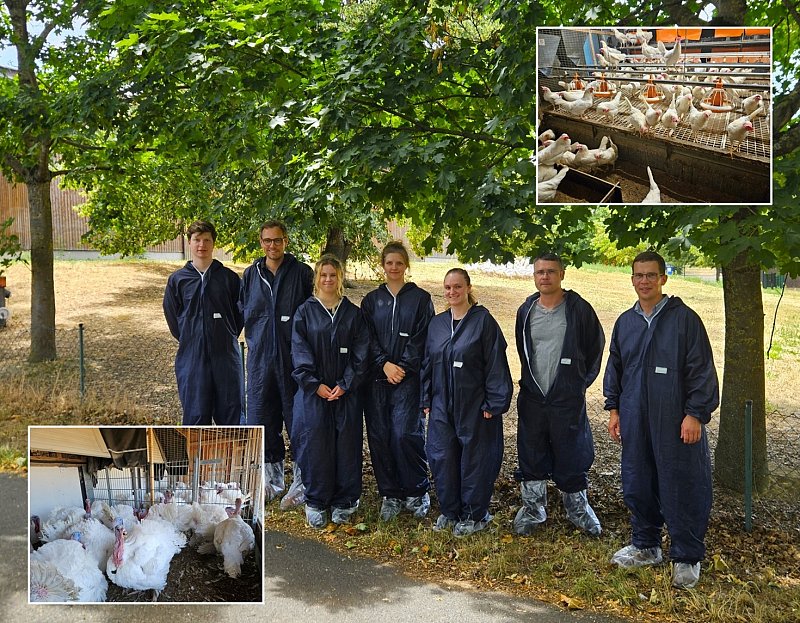
Masterstudierende besuchen Geflügel-Versuchsstation Kitzingen
Am 23. Juni 2026 besuchten Studierende des Mastermoduls Aktuelle Aspekte der Nutzgeflügelforschung das Versuchs- und Bildungszentrum für Geflügelhaltung am Staatsgut Kitzingen. Die Einrichtung der Bayerischen Staatsgüter (BaySG) zählt zu den wichtigsten Standorten für angewandte Forschung, Wissenstransfer und berufliche Bildung in der deutschen Geflügelwirtschaft.
Im Rahmen einer ausführlichen Führung stellte Dr. Philipp Hofmann, wissenschaftlicher Leiter der Arbeitsgruppe Geflügelfütterung und -haltung an der Bayerischen Landesanstalt für Landwirtschaft (LfL), die vielfältigen Aufgaben und aktuellen Entwicklungen am Standort vor. Mit großer Fachkompetenz und Praxisnähe erläuterte er aktuelle Herausforderungen der Geflügelhaltung sowie die Bedeutung wissenschaftlicher Forschung für die Weiterentwicklung tiergerechter und nachhaltiger Produktionssysteme.
Während des Rundgangs erhielten die Studierenden Einblicke in die Haltung und Erforschung verschiedener Geflügelarten, darunter Mastputen, Broiler, Jung- und Legehennen, Enten und Gänse. Darüber hinaus konnten die Versuchseinrichtungen und die stationseigene Brüterei besichtigt werden. Die enge Verzahnung von Forschung, Praxis und Ausbildung wurde dabei besonders deutlich.
Vorgestellt wurden zudem aktuelle Forschungsprojekte der Versuchsstation. Dazu gehören Untersuchungen zur Weiterentwicklung von Haltungsverfahren bei Mastputen, das Projekt MastOpti(M)um zur Reduktion der Umweltfracht der Broilerfütterung sowie Optimierungen im frühen Management der Junghennenaufzucht. Die Projekte verdeutlichen das breite Forschungsspektrum der Einrichtung und ihren Beitrag zur Entwicklung zukunftsfähiger Haltungssysteme.
Die Exkursion bot den Teilnehmenden wertvolle Einblicke in aktuelle Forschungsfragen und innovative Ansätze der Nutzgeflügelhaltung und unterstrich die Bedeutung des Standorts Kitzingen als führendes Kompetenzzentrum für Forschung und Bildung im Geflügelsektor.

Open-air stable (Image: Markus Freick)

Surrogate cow rearing (Image: Markus Freick)
Field trip to Hofgut Eichigt: An insight into modern organic dairy farming
On 11 June 2026, BSc students in Agricultural Sciences visited the Hofgut Eichigt as part of the compulsory elective module ‘Livestock Farming in Organic Agriculture and Applied Animal Welfare’. The excursion was organised by the network Fokus Tierwohl. During the guided tour led by Andreas Wagner, students gained fascinating insights into organic dairy farming on a large-scale farm. Particular focus was placed on grazing-based husbandry, the concept of suckler-based calf rearing, and the farm’s own dairy. We would like to extend our sincere thanks to Mr Wagner for the interesting and open tour, as well as to animal welfare ambassadors Annika Krüger and Juliane Lieberwirth for the excellent organisation and the opportunity to gain this valuable practical insight.
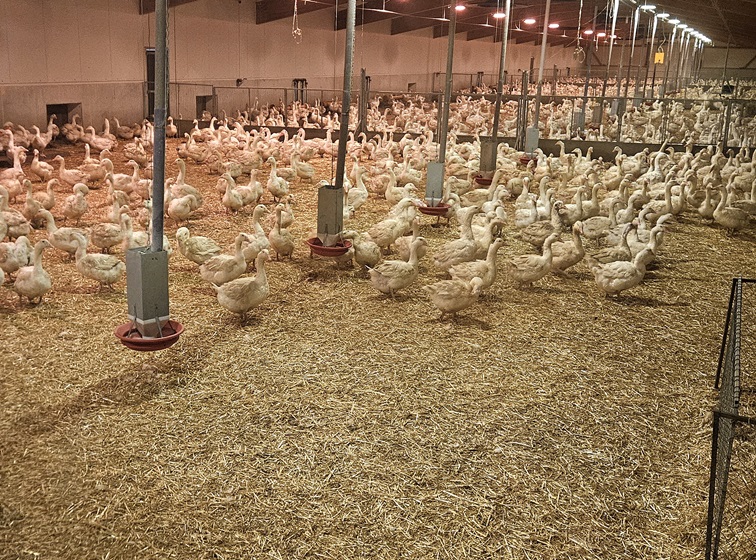
In the goose house (Image: Ruben Schreiter)
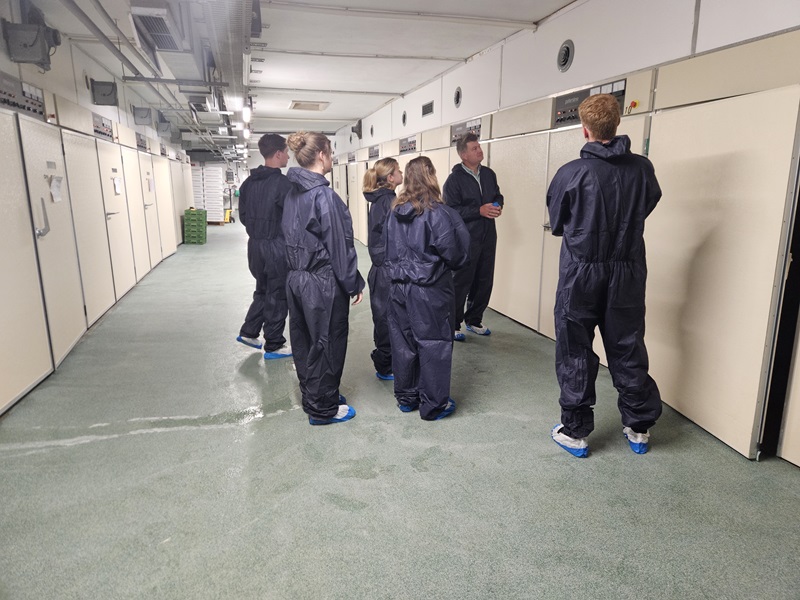
Group tour (Image: Ruben Schreiter)
Field Trip to Eskildsen Goose Farm
As part of the master’s modules “Livestock Ethology and Ecology” and “Current Aspects of Poultry Research,” students from Martin Luther University Halle-Wittenberg visited Eskildsen Goose Farm in Wermsdorf on June 2, 2026. The company is one of Germany’s leading goose farms and specializes in the production of geese, hatching eggs, goslings, and high-quality down products.
Under the expert guidance of Mr. Lutz Witt, the participants gained comprehensive insights into the various areas of the farm. In addition to touring the parent stock housing, the processes in the hatchery, the slaughterhouse, and the down processing facility were presented. In particular, the explanations regarding breeding work, the management of parent stock, and the requirements along the entire value chain provided an in-depth look at specialized goose farming.
Another focus of the excursion was the discussion of current challenges in waterfowl farming. In particular, the effects of avian influenza on breeding and propagation operations, as well as the associated requirements for biosecurity and flock management, were discussed in depth. Furthermore, potential prospects for a future vaccine against avian influenza and its significance for the industry were discussed.
The field trip offered students the opportunity to combine theoretical course content with practical insights into a